


Traba
4.2848.00 Reviews
App Specs
- Version
- 1.91.0
- Updated On
- License
- Free
- Downloads
- 100,000+
- Developer
- Traba
- Categories
- Business
- Platform
- Android
Screenshots
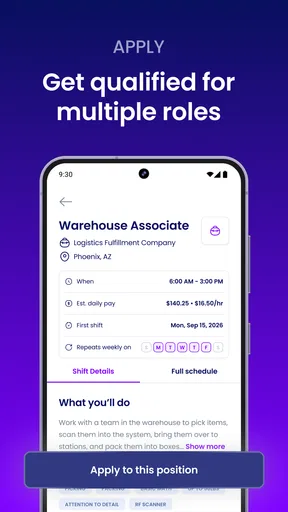
 Analysis by AppCompare
I approached Traba as someone looking for practical, flexible work rather than as a traditional job-search tool. The app sits in the business category and is developed by Traba, with a straightforward purpose: connect people with flexible work opportunities through a mobile experience. That focus makes it more useful for a person who wants to find shifts or short-term work arrangements than for someone building a long-term corporate career.
My first impression was that the app is trying to reduce the distance between “I need work” and “I need work that fits my current schedule.” That distinction matters. Many employment platforms are built around lengthy applications, polished résumés, and permanent positions. Traba feels aimed at a different rhythm, where availability, location, and the type of work you can take on may matter more than presenting a complete professional profile.
The app is free to download and use, which is its clearest financial advantage. I can evaluate it without paying an upfront fee or committing to a subscription. That does not automatically mean every work opportunity produces the same value, since the practical result depends on the shifts available to me and whether they match my needs. Still, free access makes it reasonable to try before deciding whether it deserves a regular place in my routine.
How Traba works as a flexible-work companion
I find it helpful to treat Traba as a place to explore flexible-work options, then pause before turning a promising listing into a commitment. In this section, I’ll focus on the small checks that can make the first use feel clearer, especially when an opportunity does not fit neatly into an already busy week. That practical mindset also makes it easier to see when a snag may come from timing or circumstances rather than the app itself.
A focused alternative to broad job boards
What separates Traba from a general job board is its narrower purpose. A large employment website can contain everything from office careers to internships and permanent management roles. That breadth is useful when I want to explore a whole career path, but it can also create noise when I simply need flexible work. Traba is more appealing when my search begins with availability and immediate practicality.
I would not treat it as a replacement for every employment service. If I were preparing for a professional role that requires a detailed résumé, references, portfolio links, or several interview stages, a conventional career platform would probably be better suited to that process. Traba makes more sense when I want to discover work that can fit around other obligations and when I am willing to judge each opportunity on its schedule and requirements.
The store rating is a 4.2 average from around 4.7 thousand ratings, while the app has more than 100 thousand installs. Those figures suggest that it has attracted a meaningful audience and that many users find the basic idea worthwhile. I still would not read them as a promise that every local market or every shift will feel equally useful. A work marketplace is highly dependent on what is available where I live and when I am searching.
Worth Reading Before You Choose

EA SPORTS FC Mobile 26 Is a Bigger Football Game, but It Takes Time

Flipboard Shows What News Apps Must Do Beyond the Feed

Switching to Android Auto Means Rethinking Your Driving Routine

Google Calendar Makes a Crowded Week Easier to Manage

Ludo King Makes the Most of the Minutes Between Plans

Baby Panda World Brings Quick Play to Modern Phones, but Its Game Library Feels Busy
The everyday scenario where it makes sense
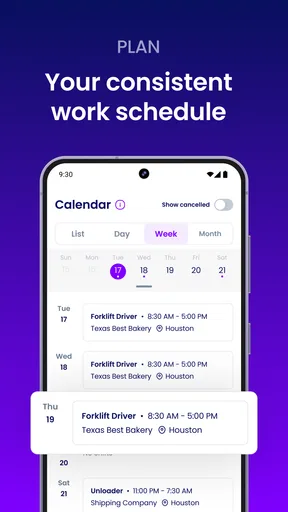
Imagine that I have a regular part-time commitment but several open weekdays next week. I do not want to spend those days sending applications for permanent jobs, and I may not want to accept a fixed schedule that conflicts with my existing plans. In that situation, I could open Traba, review the opportunities that fit my availability, and decide whether a particular shift is worth pursuing.
The important benefit is not simply seeing a list of jobs. It is being able to think in terms of usable time. A shift that looks attractive on paper may become a poor choice if the travel takes too long, the hours collide with another responsibility, or the work does not fit my energy level. I found that the app is most valuable when I use it as a planning tool rather than accepting the first available option.
That approach also gives me a useful habit: I check my week before browsing. If I begin by identifying the exact days and time windows I can realistically offer, I can judge opportunities more quickly and avoid wasting attention on work that was never possible for me. This is a small workflow change, but it makes a flexible-work app considerably more practical.
What the free price really means
Traba is listed as free, so there is no purchase decision in the usual sense. I do not need to pay for the app before exploring its purpose, and that lowers the risk for someone who is curious but unsure whether flexible work is available nearby. The free model is especially helpful for people whose income needs make paid job-search tools difficult to justify.
At the same time, free access should not be confused with guaranteed earnings. The app can provide a way to look for work, but the value I receive depends on the opportunities I can actually use. Location, timing, suitability, and personal eligibility all affect the outcome. I would therefore judge it by the quality and usefulness of the opportunities presented to me, not merely by the fact that downloading it costs nothing.
That distinction is important when comparing it with paid career services. A subscription-based platform may offer additional résumé tools, coaching, or premium visibility, but those extras are not automatically better for someone who wants flexible shifts. Traba’s advantage is simpler: I can test its usefulness directly without first paying for a package of features I may never need.
Where the app can save time
The strongest practical value comes from narrowing my search around flexible work instead of making me translate a broad job board into my own schedule. When I am looking for a short-term opportunity, the time saved by avoiding irrelevant listings can matter almost as much as the opportunity itself. I can spend more energy deciding whether a shift is realistic and less energy filtering out unrelated career postings.
I also like the idea of separating discovery from commitment. I can use the app to understand what kinds of work are appearing in my area before deciding how often I want to rely on it. That makes the first visit useful even if I do not immediately accept anything. It helps me learn whether the platform fits my local needs rather than assuming that a national service will automatically work well for me.
A second useful habit is to compare the complete time cost, not just the scheduled hours. I consider travel, preparation, and the effect on my next day. Flexible work is only genuinely flexible when the surrounding effort remains manageable. Traba can help me find possibilities, but I still need to make that calculation myself.
Tradeoffs I would consider before relying on it
The biggest limitation is that flexibility does not guarantee consistency. Someone who needs a predictable weekly income may find a shift-based approach stressful if suitable opportunities do not appear at the right times. I would be cautious about treating the app as my only source of work until I had used it long enough to understand whether the available options reliably match my schedule.
There is also a difference between finding an opportunity and finding the right opportunity. A listing can be technically available while still being inconvenient because of distance, timing, or the kind of work involved. I would not rush through the selection process simply because the app makes browsing easy. The more urgent my financial situation, the more important it becomes to check each commitment carefully before accepting it.
Another tradeoff is focus. Traba’s specialized purpose is an advantage for flexible work, but it may feel limiting if I want to compare that path with office roles, freelance projects, training programs, or permanent employment in one place. In that case, I would use it alongside a broader service rather than expecting one app to cover every stage of my career.
I also think expectations matter. The app’s store summary presents it as a way to find flexible work that can earn more, but I would interpret that as a goal rather than a personal guarantee. My results would depend on the work available to me and the choices I make. A responsible user should compare the practical benefit of each opportunity instead of assuming that flexible automatically means higher income.
Small workflow improvements that make it more useful
My first tip is to keep a personal availability template before opening the app. I write down the periods when I can genuinely work, including travel time and recovery time. This prevents me from accepting a shift that technically fits one day but makes the rest of the week unmanageable.
My second tip is to use a simple decision check for every opportunity: schedule, travel, physical or practical demands, and the effect on my other commitments. Even without turning the process into a spreadsheet, this keeps an attractive-looking listing from dominating my judgment. The app helps with discovery; my checklist protects the quality of the decision.
My third tip is to treat the first few searches as research. I look for patterns in the opportunities that appear, note which time windows seem realistic, and pay attention to whether the work aligns with what I can actually do. This is more useful than opening the app only when I am already desperate for income, because I can build a clearer picture before making an urgent choice.
A fourth insight is that flexibility has a personal threshold. Some users want occasional work around school, caregiving, or another job. Others need a dependable routine and would rather accept a fixed position. Traba is more compelling for the first group. For the second, it may be a supplementary channel rather than a complete employment solution.
Who is likely to get the most value
I would recommend trying Traba if I needed flexible work and wanted a focused mobile starting point. It may suit someone balancing classes, family responsibilities, another job, or an irregular weekly schedule. It is also a sensible option for a person who wants to explore available work without paying for access first.
It can be especially useful for someone who prefers making decisions shift by shift instead of committing immediately to a permanent schedule. That model gives me more control over how I use open time, provided I remain realistic about the availability and consistency of opportunities in my area.
The app may also help a newcomer to the job market who does not yet have an extensive résumé or a clear long-term direction. Flexible work can provide a way to start exploring what kinds of responsibilities and schedules feel suitable. I would still view it as one part of a broader plan if my goal were to build a specialized career.
Who should choose another option
I would skip Traba if my main requirement were a guaranteed, fixed schedule or a clearly defined long-term career ladder. A conventional employer site, local staffing service, or professional networking platform may be more appropriate depending on the role I want. Those alternatives can provide a broader view of permanent positions and career-focused opportunities.
I would also avoid depending on it alone if I could not tolerate uncertainty around when suitable work might appear. Flexible platforms work best when I have some control over my time and can evaluate opportunities without accepting every possibility. If my budget requires highly predictable income, I would first seek a stable job and use Traba only as a supplement.
Finally, someone who expects extensive career tools may find the app too narrowly focused. I would not install it looking for deep résumé editing, professional networking, or a complete employment-management system. Its appeal is the flexible-work search itself, not the full range of services offered by large career platforms.
Device support and basic details
Traba is free, suitable for Everyone, and available for devices running Android 7.0 or later. The current version is 1.91.0, so I would check that my phone meets the operating-system requirement before trying to install it. The app was released on July 12, 2021, and its continued presence alongside a current version suggests that the service has remained active enough to receive ongoing updates.
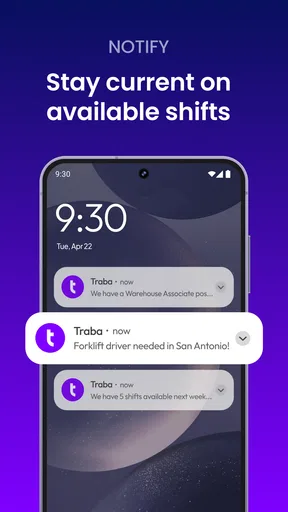
Those details make the app accessible to people using older Android phones, although the experience will still depend on the device itself and the quality of the connection. Since this is a work-search tool, I would also keep my phone charged and notifications organized if I were actively looking. Missing a relevant update can be more frustrating in a flexible-work context than in an ordinary casual app.
The developer is Traba, which keeps the identity of the service clear rather than making the app feel like an unrelated listing aggregator. I would still make my own decisions about each work opportunity and avoid confusing the convenience of the app with an employment guarantee.
My verdict on the value
After looking at the app through the lens of actual use, I see Traba as a practical free tool for people whose employment needs are flexible, immediate, or irregular. Its value is strongest when I have open time to offer and want a focused way to explore work rather than a huge collection of unrelated career listings.
The free price makes trying it an easy decision, but the more important question is whether the available opportunities fit my location and routine. I would install it, review the local options, and compare them honestly with my travel, schedule, and income needs. I would not pay for access, because the app is free, and I would not assume that free access alone makes every opportunity worthwhile.
My final recommendation is positive but specific: use Traba if you want to investigate flexible work and can handle some uncertainty. Keep another job-search route available if you need stable hours, professional advancement, or a broad career marketplace. For the right user, the real benefit is control over how open time becomes workable time; for the wrong user, that same flexibility may feel too unpredictable. That is why I would recommend it as a low-risk option to test, not as a universal replacement for every way of finding employment.
Pros
- Helps workers find nearby shifts that match their skills and availability.
- Clear job details make it easier to compare pay
- location
- and shift times.
- Useful for discovering short-term work without a lengthy application process.
- In-app communication can simplify contact with employers before accepting a shift.
- Ratings and work history may help build credibility for future opportunities.
Cons
- Availability of shifts depends heavily on your city and local employer demand.
- Some positions may require transportation
- certifications
- or prior experience.
- Last-minute schedule changes can be inconvenient for workers planning ahead.
- Earnings may vary considerably because available work is not always consistent.
- The app may request personal and work-related information during registration.
FAQs for Traba
What is Traba, and how does the app work?
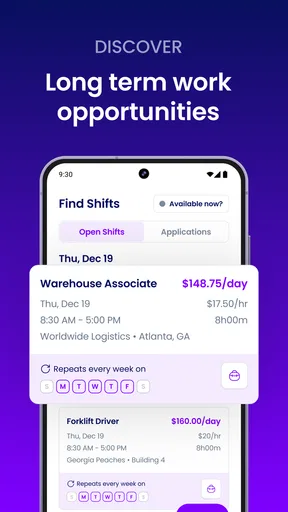
Traba is a workforce marketplace designed to connect businesses with hourly workers for short-term or flexible shifts. After creating a profile, workers can browse available opportunities, review details such as location, pay, schedule, and requirements, and apply for suitable shifts. Businesses use the platform to find workers for operational roles, although availability can vary depending on location and local demand.
Is Traba available for everyone, or are there eligibility requirements?
Traba is not necessarily available to every user in every region. Access generally depends on whether the service operates in your area, the types of jobs offered locally, and whether you meet the requirements for a particular shift. You may need to provide personal information, work history, identification, and authorization to work. Some positions can also require specific experience, certifications, or physical capabilities.
How much can I earn through Traba, and when do I get paid?
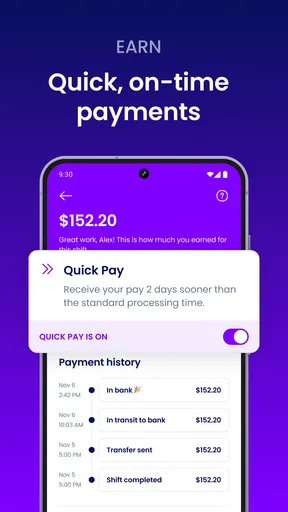
Earnings on Traba depend on the individual shift, job type, location, duration, and employer. The app typically displays compensation and assignment details before you accept an opportunity, allowing you to compare available work. Payment timing and methods may differ according to the platform’s current policies, your account status, and applicable local regulations, so users should review the payment information carefully before accepting a shift.
What types of jobs can users find on Traba?
Traba primarily focuses on hourly and operational work rather than traditional remote freelance assignments. Depending on your area, listings may include warehouse, logistics, manufacturing, fulfillment, production, or other hands-on roles. Each opportunity can have different requirements involving transportation, clothing, equipment, lifting, scheduling, or prior experience. Read the complete listing before applying, because the actual duties and workplace conditions may vary.
Is Traba safe to use, and what should I check before downloading it?
Traba can be useful for finding flexible work, but users should still take normal precautions when using any employment marketplace. Download the app only from an official Android or iOS store, check the developer information, and review its privacy and payment policies. Never share sensitive information outside the official app or pay an employer to obtain a job. Also confirm shift location, cancellation rules, workplace expectations, and support options before accepting an assignment.


